
Ultrasound vs Echocardiogram: What Is the Difference?
Both tests use sound waves to create images. What they look at, and why they are ordered, is very different.
Side-by-Side Comparison
Ultrasound
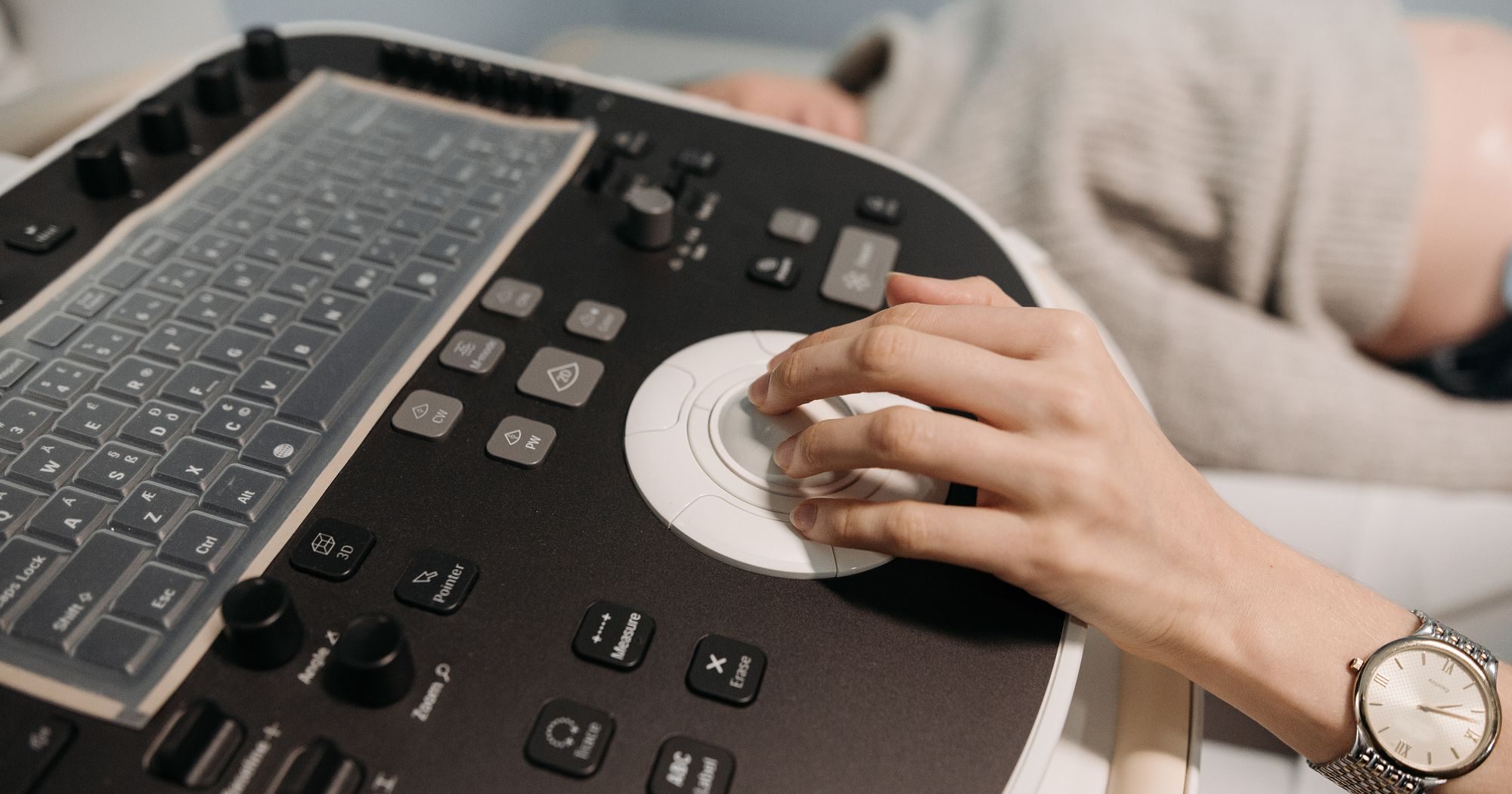
A diagnostic ultrasound (sonogram) sends sound waves into the body and translates the echoes into images. It is used to view organs such as the liver, gallbladder, kidneys, thyroid, and pelvic structures, as well as blood vessels.
It is widely used because it is noninvasive, involves no radiation, and gives real-time images. Doctors often order it when symptoms point to a problem in soft tissue, such as abdominal pain, a lump, or swelling.
During the test, a technician applies gel and moves a handheld probe over the area being studied. Most people feel only light pressure.
Echocardiogram
An echocardiogram is an ultrasound of the heart. It shows the size of the chambers, the thickness of the walls, how well the heart pumps, and how the valves open and close. Doppler imaging can also show the direction and speed of blood flow.
It is commonly ordered for a heart murmur, unexplained shortness of breath, leg swelling, palpitations, or to monitor a known heart condition.
A standard transthoracic echocardiogram is done with a probe on the chest. Other forms exist, and your doctor will explain if a different type is needed.
How to Decide
Choose an ultrasound if...
- Your concern involves the abdomen, pelvis, thyroid, or soft tissue
- You have a lump, swelling, or pain in a specific area
- Your doctor wants to check blood flow in the veins or arteries of a limb or neck
Choose an echocardiogram if...
- A murmur has been heard or you have heart-related symptoms
- You have shortness of breath or swelling that may be cardiac
- You need follow-up for a known heart condition
This guide is general information. Your own doctor decides which test is appropriate.
Frequently Asked Questions
Is an echocardiogram a type of ultrasound?
Yes. An echocardiogram uses the same sound-wave technology as other ultrasound exams, but it is focused on the heart and records moving images of its structure and function.
Does either test use radiation?
No. Both use high-frequency sound waves rather than ionizing radiation.
Do I need to prepare for the test?
Preparation depends on the exam. Some abdominal ultrasounds ask you to fast beforehand, while an echocardiogram usually needs little preparation. Follow the instructions you are given when the test is ordered.
Can an ultrasound detect heart problems?
A general ultrasound is not designed to evaluate the heart in detail. An echocardiogram is the test used for that purpose.
How do I know which test I need?
It depends on your symptoms, history, and exam findings. Your primary care doctor can recommend the appropriate test after evaluating you.
Not Sure Which Test You Need?
Talk with Ven A Verte Medical Center in Hialeah, FL at (786) 542-1882 or send us a message.
Discuss Your Options